

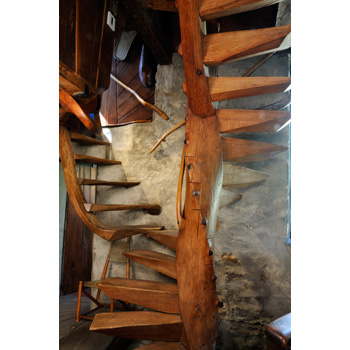
In 1997 I visited Wharton Eshericks house in the USA and was utterly charmed. The whole house is a piece of functional sculpture. Centerpiece is the spiral staircase which has been much copied elsewhere. It is rare for me to find the work of a 20th century woodworker that I admire as much as that of medieval woodworkers but here was one.
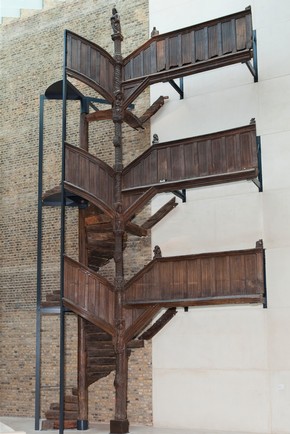
I could cut and paste info about it but better to just post a link to the V&A website.
As with Eshericks stair the beauty is in the detail of the execution. The coarse but highly skilled toolmarks, the mark of a master craftsman. working at speed.
And just for fun to see what folk think this video is what brought the staircase to mind today, it only appears in the background behind a modern architect designed tea house. I like the tea house and find it though provoking but can’t help questioning the build quality and thinking that the textures are an imitation of the workmanship that I love and will not last.


I can think of better uses for an oxy-acetylene set up! If charring really works so well why aren't there more buildings done in it. Looking forward to visiting the Nashe exhibition at YSP to see his charring. There's a good overview of the process here: http://www.culturecolony.com/news?id=1964
Hi Richard,Charring is actually a good way of preserving wood and it has been traditionally used for that area 6" above and below ground of a gatepost where it rots. The amount of energy involved in this system is hardy green mind you.I will probably visit Nash at YSP though I rarely find his work as inspiring as Goldsworthy, Long or Partridge.
Yeah! I've been a Goldsworthy addict for some time. My daughter once borrowed a Goldworthy library book for me for a Christmas present! Sloane mentions charring fence posts now I come to think of it.Charred my bench at work yesterday, by accident; smithing and woodwork are uncomfortable bedfellows! But found that an Aldi airbed blower makes an ace forge with charcoal.