

I am a huge fan of traditional pottery and draw a lot of inspiration from potters, their work, their pots and in many cases their writing too. Pottery seems to have a connection with the earth and with it’s historical routes in a way that I like to think my work does but much of woodworking in the UK has lost. As I start to write this I don’t know if I can say anything meaningful in just one blog post, we will see.
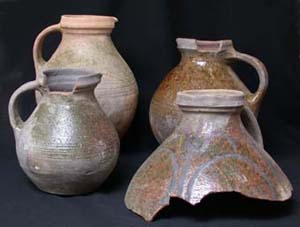
Let’s start in the medieval period when virtually no plates and bowls were made from pot (people ate and drank from wooden bowls) but there were a great many potteries making earthenware cooking pots, storage jars and beautiful jugs. English medieval jugs have been praised, are revered around the world and have evolved and been rediscovered by many potters working today.
In the 17th and 18th centuries pottery changed, for the first time many open forms were produced. Dishes became a common form many of which were decorated with slip, that is a thin 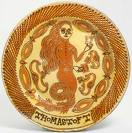 clay of a different colour to the main body of the pot often applied by pouring in a decorative pattern. Thomas Toft is the maker everybody knows but this grand work does little for me, I love the simple slip trailed dishes that were made in vast numbers for everyday use.
There are some dishes at Haddon Hall that I adore, they are made with such a free hand and also have the patina of many years use. I would love one of these dishes to bake lasagna.

In the early twentieth century there were still a few country potteries turning out traditional slipware, saltglazed stoneware and such but then largely through the influence of Bernard Leach (author of “a potters book” and translator of a personal favourite “the unknown craftsman”) there was a revival of small scale potteries producing domestic ware. Some of these worked in old British traditions many blended in Japanese techniques and high fired stoneware became much more popular becoming very much part of our modern traditional heritage. Bernard Leach’s grandson John still makes a range of domestic stoneware at Muchelney Pottery http://www.johnleachpottery.co.uk/
Leach’s greatest pupil was Micheal Cardew who made some of the most glorious slipware pots ever, his greatest pupil in turn was Svend Bayer, a favourite potter of mine who I shall do another post on later. For now though lets stay with slipware, to many Clive Bowen is the greatest name in slipware working today, I love his work but I would like to look instead at Doug Fitch a slipware potter who has an excellent blog here http://slipware.blogspot.com Doug works in Devon, there is a tremendous group of potters in Devon I don’t know why, presumably the clay is good, perhaps when they all moved there housing was cheap but it is interesting that the Devon tradition should be so vibrant today when so many of the other areas the did support good pottery traditions have died out.
 Doug makes a range of pots but the ones that stand out for me are his slipware jugs, full of vitality and very much part of a living tradition goin back to those medieval potters 600 years ago, never static, each generation reniventing the tradition and adapting old techniques to meet the needs and tastes of the day.
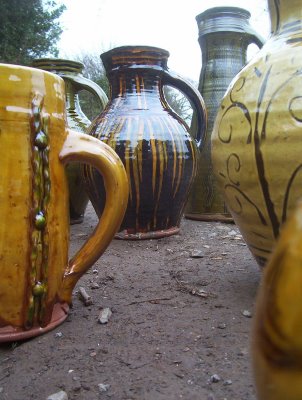
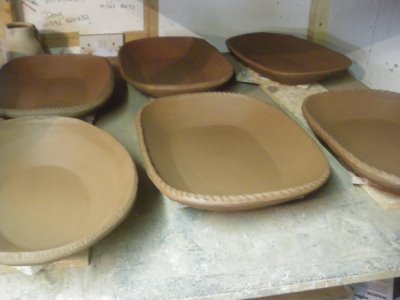
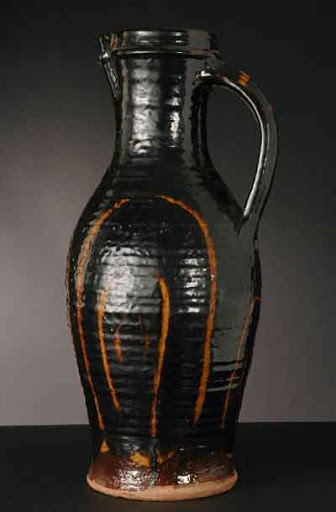 Most exciting for me is that Doug recently acquired by wonderful good fortune Micheal Cardew’s original moulds for making the moulded dishes and having seen what he does with jugs I am really looking forward to seeing how the dishes turn out, perhaps I will get my lasagna dish after all.


Doug’s work is very special. My ceramics days were wonderful and I was taught my Michael Cardew’s son Seth.
I am a great lover of slipware (though no expert), particularly Clive Bowen, I was interested to read about Doug Fitch and am going to have to find out more about him.I work at the newly refurbished Leach pottery which is now a working museum. I’m not sure if Bernard would approve or not, it would be great if we could get his opinion but John seems quite happy with it, mind you we sell a lot of his pots.Oh, I’m not a potter by the way (at least not any more), I maintain the place, make work benches, display stands, furniture etc.Is the front left jug in the top picture from Verwood? I would love to find one. I have large a Truro pottery pitcher from pre 1900 and a later one from c1940. I also have a Devon pitcher which is slightly the worse for wear. These things are becoming harder to find all the time.
I haven’t visited St Ives since the changes but I have to say when I visited 10 years ago I was amazed and disappointed that a place with such history could be so poorly presented. Glad to see things happening and look forward to visiting again.The pots in the first picture are “part of a group of waste pots found buried in a pit to the rear of a house at The Street in Weybread. They are typical examples of the products of an industry which was located in the Waveney Valley and around Wattisfield in the 15th-16th centuries.” From Suffolk CC Archaeology website.
It’s great to see a vibrant community of craftspeople keeping old traditions alive, and adding to those traditions with new and outside forms. We have a similar place here in North Carolina in the US. It’s called Seagrove and has been a center for pottery production since the 18th century, which is a long time in these parts. Many of the potters are similar to the ones you feature in that they are not only keeping local, traditional forms (many based on English and Irish wares) and techniques alive, but also bring in elements from other cultures and times and a dash of their own artistic vision. If you’re ever in this part of the world, I recommend a visit. Here’s a good place to start. http://www.discoverseagrove.com/Cheers!Andrew
Thank you Robin for this post. Those old jugs are beautiful, they were amazing makers those guys – folk were in those days, it was in their blood I guess. I wish I could make dishes like that old one, great skills. Hi Jude, fancy meeting you here.