

The way craft skills are passed on has changed dramatically over the last 100 years. As with much of education the focus seems to me to have moved from knowledgeable teachers deciding what is good for the students whether they like it or not to the students being customers who get to do what they enjoy most or what is required to tick the boxes of the qualification required to obtain the funding. The reason for the wooden spoon will become clear below.
Those of us who don’t rely on public funding are in the lucky position of deciding exactly what and how we want to teach. There are many folk out there that want to experience making beautiful functional things. Since folk are paying out of their own pockets and fitting it into busy lives the main demand is for short courses from a couple of days to maybe 10 days. What should we as craftspeople/teachers try to pass on in that short time? It seems to me there are two options. The first is to accept that this is just a taster, the customer is on a holiday and we are holiday experience providers. We make life easy, help them lots, and make sure they go home with a wonderful end product. Perhaps if they enjoy their holiday and are inspired they will try to take it further and set about acquiring the skills they need, they will also have gained a meaningful insight into the world of craft.
Personally whilst I think the holiday experience is a great thing to do when I started teaching I wanted to do something more empowering and long lasting. I was less interested in what people made on the course and more interested in whether I could pass on the skills in a short time so that they could go away and make beautiful things at home. Friends who teach chairmaking courses tell me that less than 5% of people ever make another chair where I estimate 95% of my spooncarvers carry on at home. When I teach the first day of a course we make nothing but woodchips. The emphasis is entirely about learning skills and when you come to green woodworking with no prior experience you need to spend time learning those skills properly before you can make things efficiently, safely and well. I believe it is really worth while investing this small amount of time in learning basic skills and doing it in a very concentrated way. You can learn these skills over a longer period whilst also making things but if I ask folk to carve a spatula all their focus is on the thing they are making and not on making sure they are mastering the cuts correctly
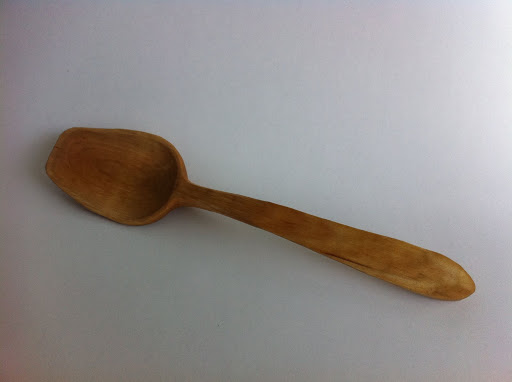
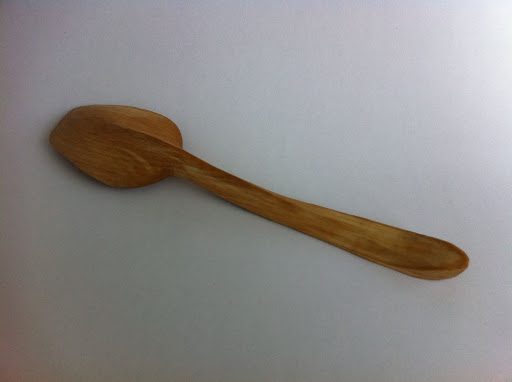
Anyway back to the spoon. Three weeks ago I taught a foundation spooncarving course. This really is a basic introduction for folk with no prior experience. Today one of the course members sent me the pictures of the spoon above and below. David carved this spoon at home using the skills learned on the course and has been eating his breakfast cereal every morning with it. The thing that excites me about this is that it is a far better spoon than the ones we carve on the course and shows the benefit of concentrating on a foundation of basic skills which can be built on at home.


I can hapily confirm that I have continued making both spoons and bowls since competing these courses with Robin. I recently spent a wek teaching my students (with learning disabilities) bowl carving, and a bit like the storyteller who changes things slightly, I have to adapt the methods and tools to make the work accessible for my students, but the core processes remain the same or similar, and the results also come out similar.