


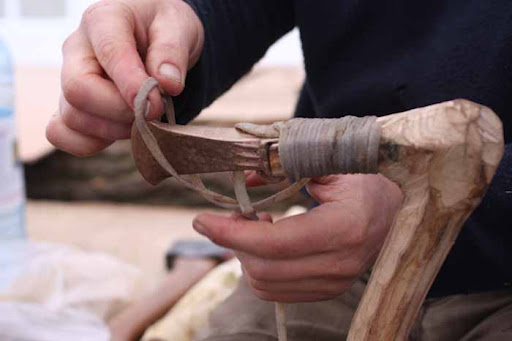
The tools cut remarkably well, lighter faster cuts than with a large steel axe but fast acurate work is certainly possible.
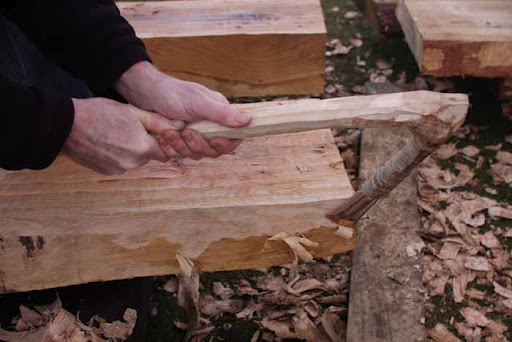
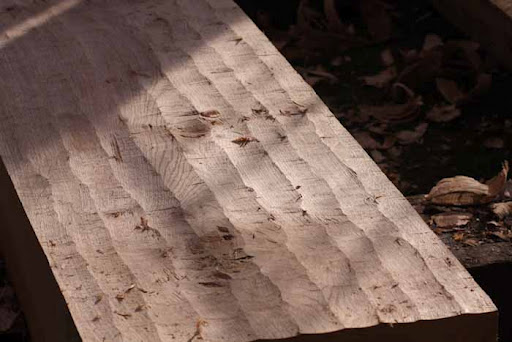
and nice surface textures come naturally off the tool.
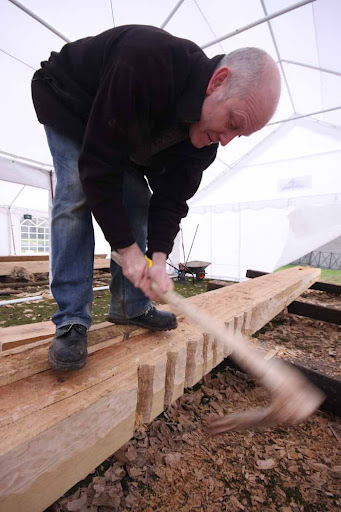
Here is Trevor notching and chopping a large timber to reduce it to the required profile.
All finished toolmarks are bronze but during roughing out we are using some steel tools, This is a gransfors forest axe in use knocking the blocks off after notching.
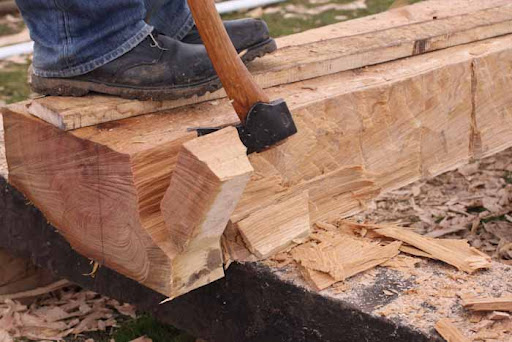
and I do the same job Japanese style with my Japanese carpenters axe.
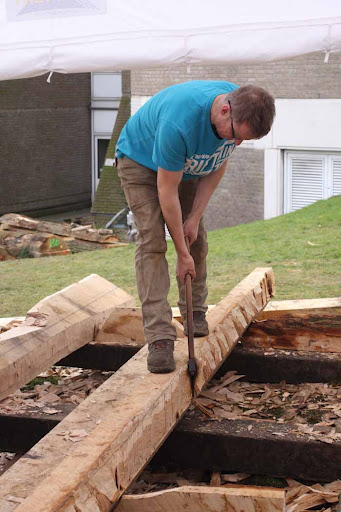
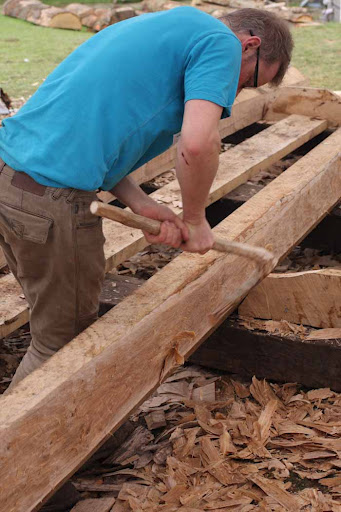
after rough shaping timbers are dressed down to the final profile and surface with the bronze tools.
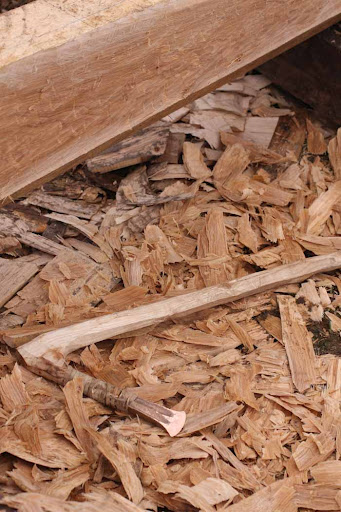
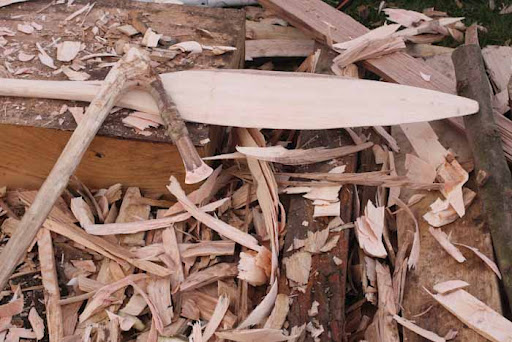
There is something very pleasing about when you get the first proper carpet of shavings on the floor and can walk about without mud or grit underfoot and tools stay sharp without touching soil or grit. Looks good and feels good underfoot too.
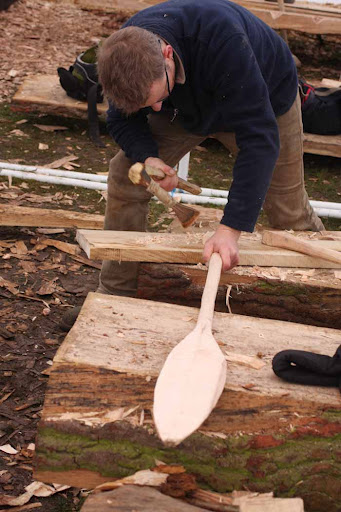
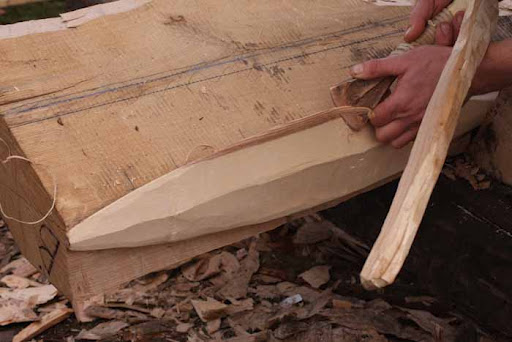
and the finished paddle. Lots more to come on this project but can’t go into more detail until after the press day on 6th March.
I have learned a lot already about the tools and still feel they are improving, I am very happy with how I have the edges set up now. Despite the metal being quite soft (by steel standards) it is possible to create and edge that is sharp enough to shave with and holds an edge for at least a full days woodworking. There is more to learn about how to use them well, and the best angles of handles to haft them with but so far I am very very pleasantly surprised.


Very nice 🙂
The tool marks look great like, going back in time to when these marks would be the craftsman's signature . Great stuff 🙂
This is fascinating stuff, and lovely to see the results. What type of wear are you seeing on the tools? And more specifically, are you finding that you have to sharpen them often?
I was expecting thew tools not to hold an edge long. I expected to have to deal with edges rolling every time I found a hard knot, I expected to have to sharpen several times a day.In practice it takes a while to find the right edge profile for each tool but once you are there they work wonderfully and go several days hewing all day without sharpening.
so do you think that a range of bronze tools would be good or is the axe and adze enough?
Wow, that is really something. What a fascinating experiment.
Adze/axe heads are by far and away the most common find archaeologically and there is not much you can,t do with just this tool. There are rarer finds of very narrow palstaves which could be hated as axes or chisels, either way for cutting out small mortises.
Something to think about – the relative find frequency of bronze tools is also affected by the fact that bronze was a massively 'expensive' commodity, and thus any broken tools would have been recycled. Axes and Adzes, along with swords, were also used as 'ritual' items – their value making them a bigger sacrifice to gods/ancestors – and once deposited into the archaeological record – buried, thrown into water, interred with bodies – they are not likely to be recycled. This 'ritual' effect skews the data massively for we archaeologists, and can create false patterns of use, i.e. that there are lots of axes/adzes, and fewer chisels.
Fascinating, Robin. What a great project! Beautiful job of hafting the tools. I would have thought the tools might be difficult to manage with the head weight so forward, but obviously not, based on the quality of the hewing you are doing there. Bronze tools may become the new rage.