

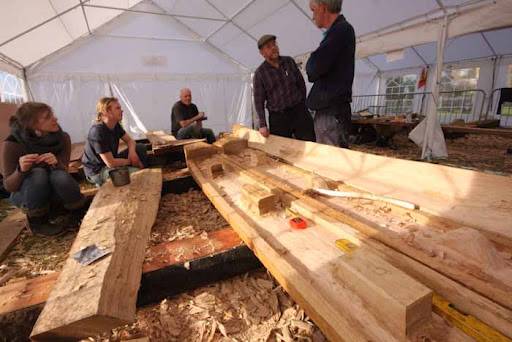
This is the upper part of the marquee with Trevor and Rachel hewing away.
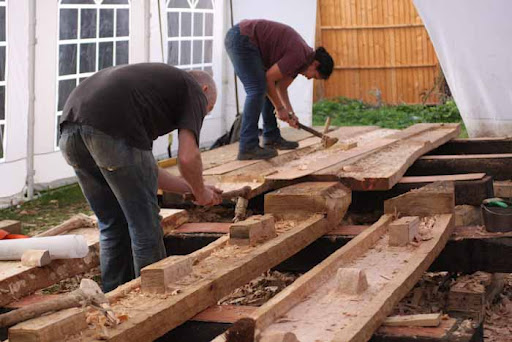
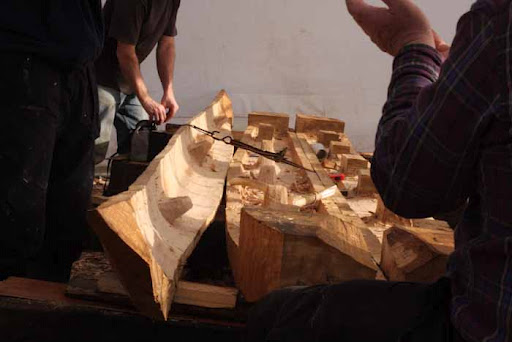
Trevor is making the central base planks, he is very keen on this sort of regulated fluting which appears in some areas on some bronze age woodwork, sadly few very clear toolmarks survive on the original boat after conservation.
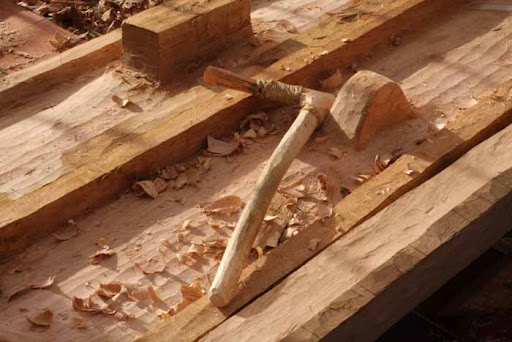
Proud hewer with his hewn surfaces.
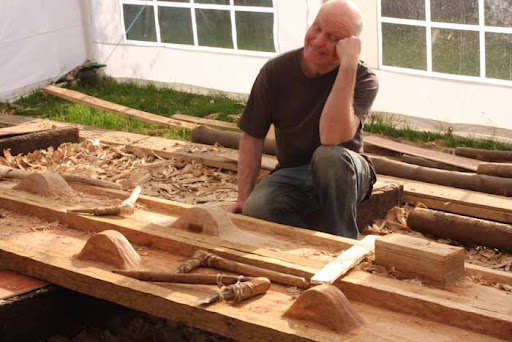
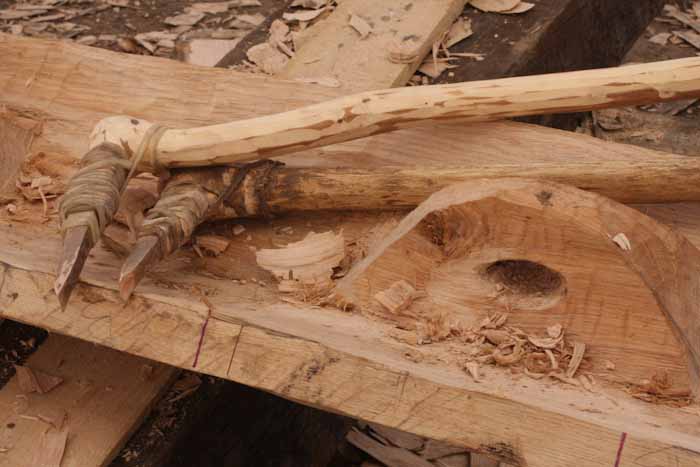
and in the lower marquee I am working on the lower side planks or iles, this is the outer surface.

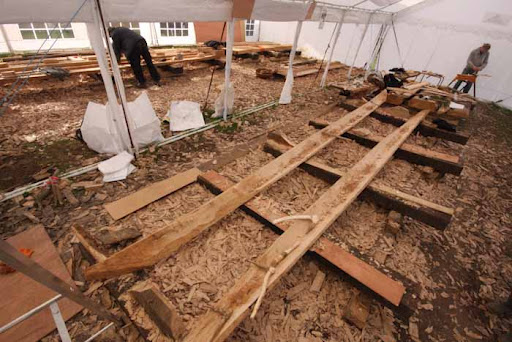
This is the moment we first brought the base timbers together and suddenly it began to look like the original in the museum. There were still very large gaps though to be taken up by steaming the planks and pulling them in together.
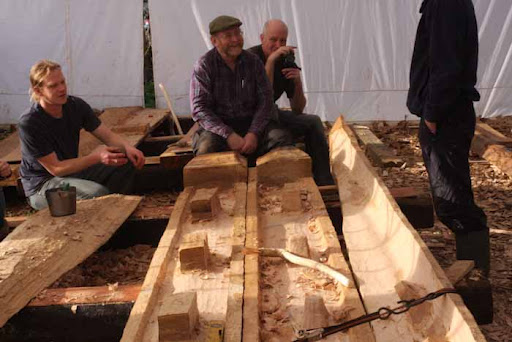
Happy team at the end of a long day
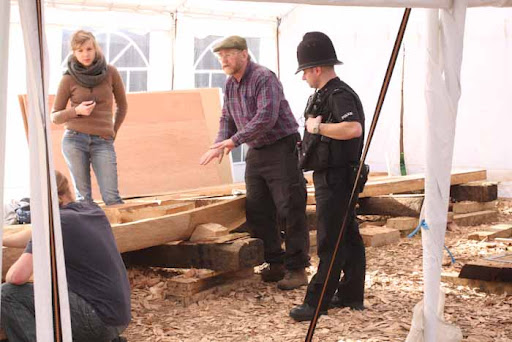
We even passed inspection by the local constabulary.


Thanks very much for the update and pictures.How much rocker is there in the bottom central plank? Would think that was difficult to steam and bend with having to compress those uprights running along its length.Must admit I thought that the planks of the Dover were carved to shape not steamed.
Would that be Edwin Gifford? If so we met at Bristol festival of the sea and you know far more about these boats than me. Richard having done his reconstruction of the timbers based on medullary ray compression has the base timbers as being part carved part bent. The base planks seem far easier to bend than the lies at least they are less stiff in their cold state, we bend the first one tomorrow. How much rocker? I am not a boaty person so don,t know how to judge this. It seems to kick up quite a bit and. Most of the curvature is in the end thirds with the central third being fairly flat.
Would that be Edwin Gifford? If so we met at Bristol festival of the sea and you know far more about these boats than me. Richard having done his reconstruction of the timbers based on medullary ray compression has the base timbers as being part carved part bent. The base planks seem far easier to bend than the lies at least they are less stiff in their cold state, we bend the first one tomorrow. How much rocker? I am not a boaty person so don,t know how to judge this. It seems to kick up quite a bit and. Most of the curvature is in the end thirds with the central third being fairly flat.
Sorry, not the great Edwin Gifford, just share a first name and a fascination with ancient boats.