

So our Dover Bronze Age boat project has got to the stage for steaming the planks. These are heavy oak timbers 20 feet long an inch and a half thick and the first ones we need to bend are also curved cross section so thus increasing their rigidity and acting like a girder.
The principle of bending wood is you have to get it up to a high temperature at which point the glues that hold the fibres together melt allowing the fibres to slide over each other. As it cools the fibres set in their new position. It takes a long time to heat up and a short time to cool down so there are several hours of anticipation followed by a few minutes of stress, bending days are fun. There is evidence for Bronze age wood bending both in surviving boat timbers including those of the Dover Boat and also there are apparently also sites alongside water where tons of pot boilers (burnt rocks) have been found. Hot rocks can be used to steam large boat timbers as in this slide show of a NWC dug out http://www.haidanation.ca/Pages/Splash/PhotoGallery/canoe_steaming.html
It would have been fun to experiment with different possible Bronze Age heating methods but the budget does not allow for that and we have plenty of other variables to experiment with so we are using 21st century heating. This is our first steaming set up, made from 2″ polystyrene, we have since replaced it with high density cellotex insulation board which lasts better with the heat.

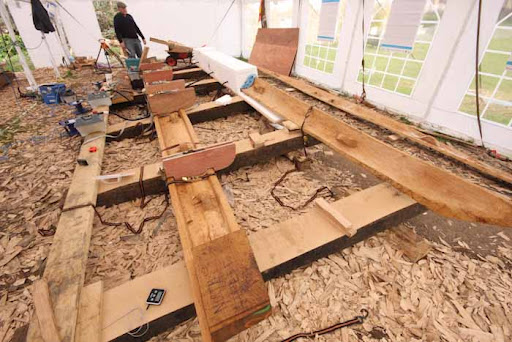
With our early steams there was lots of nervous checking and packing to keep steam from escaping, we now have it well sorted and are running at slight pressure in the chamber giving us over 100 degrees.
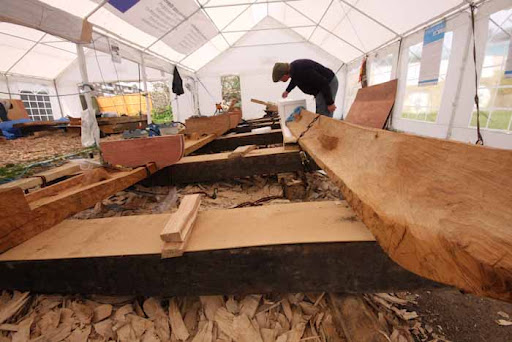
Now the moment of truth, off comes the steamer.
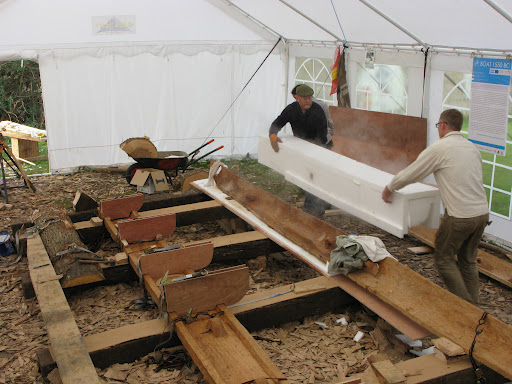
across comes the plank.
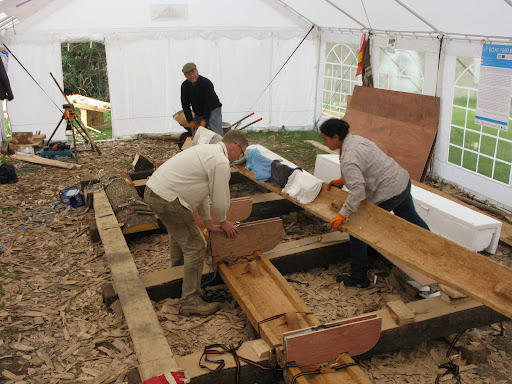
our idea had been to have a range of formers where we thought the steamed board should finish up then strap it in place.
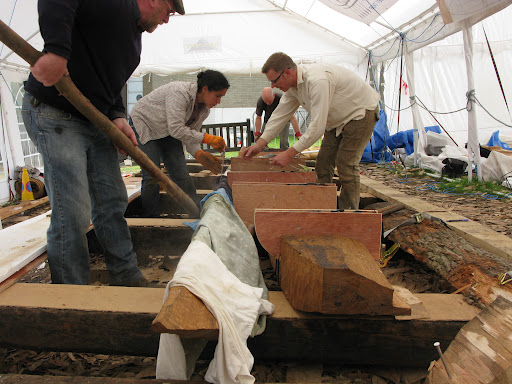
I think this picture shows the sort of nervous tension that tends to be associated with steaming.
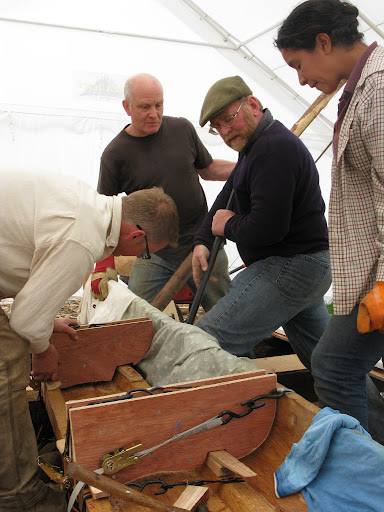
We had no way of predicting how far up the timber would rise as it came in so had wedges for under the formers, there were various issues though as you can see here we have a gap at the base where the timbers join despite being up tight on the top of the formers.
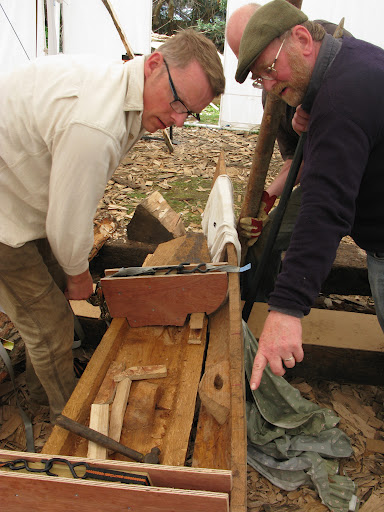
We had to rapidly dispense with the formers, bend freehand and rig extra levers which gripped the plank and put a twist in it to push the base in and top out. It worked but it all took too long so when it had cooled down and we took the clamps off it sprung back too much. This is the same end of the same timber after having been steamed a second time and held in place with the clamps.

The bend transforms the timbers from straight boards into beautiful curvaceous boat timbers. This is not just about aesthetics though the boat shape with the base dipping down in the centre and up at the ends is called rocker, the degree of rocker is crucial to boat design. A flat bottomed boat is great for going in straight lines on a canal but it doesn’t like to turn and it would break its back on waves.
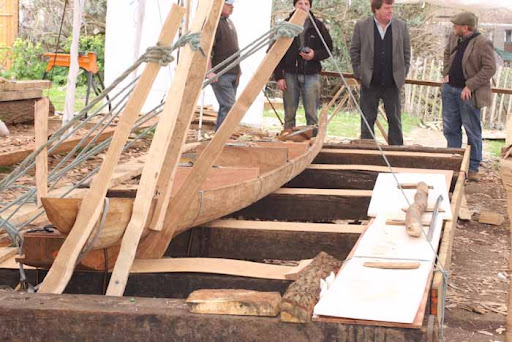
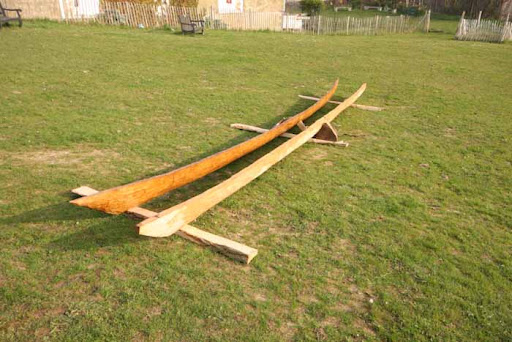
This image shows my side timbers one steamed and the other as carved, it’s hard to show the degree of the three dimensional curve in a photo but it is remarkable and astonishing that folk were doing this 3,500 years ago, it really is complex stuff.
We are genuinely feeling our way with this project and for every step forward there is a lot of head scratching, planning and forethought. It is beginning to come together nicely now though.
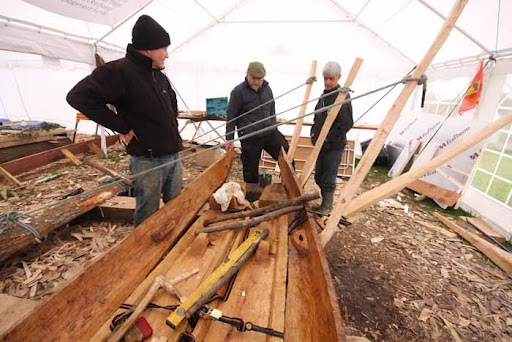
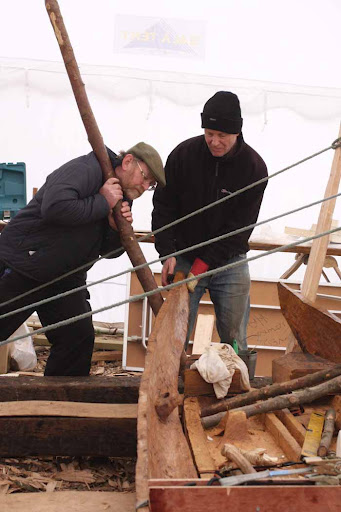
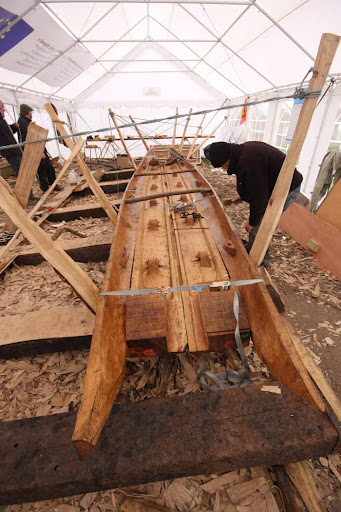
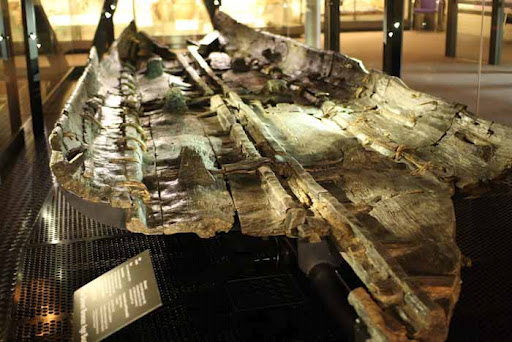


photo ten is a nice one, can start to see the "lines" of the boat. sweet.