

Our Birch bark canoe build is progressing faster than I have time to blog. We collected cedar for the ribs, gunwales and sheathing in what is called a cedar swamp, I was fearing even worse mosquitos and imagining sinking into feet deep of marsh but it was not so bad. The cedar we were after was northern white cedar Thuja occidentalis, these are quite slow grown trees and woodworkers locally are aware that they are mining the resource rather than harvesting it as the tree does not regenerate after an area is felled due to grazing pressure from deer. We took two trees which had been blown over and had heart rot and a third smaller tree for the gunnels. After felling we cut them to length and removed some of the bark.
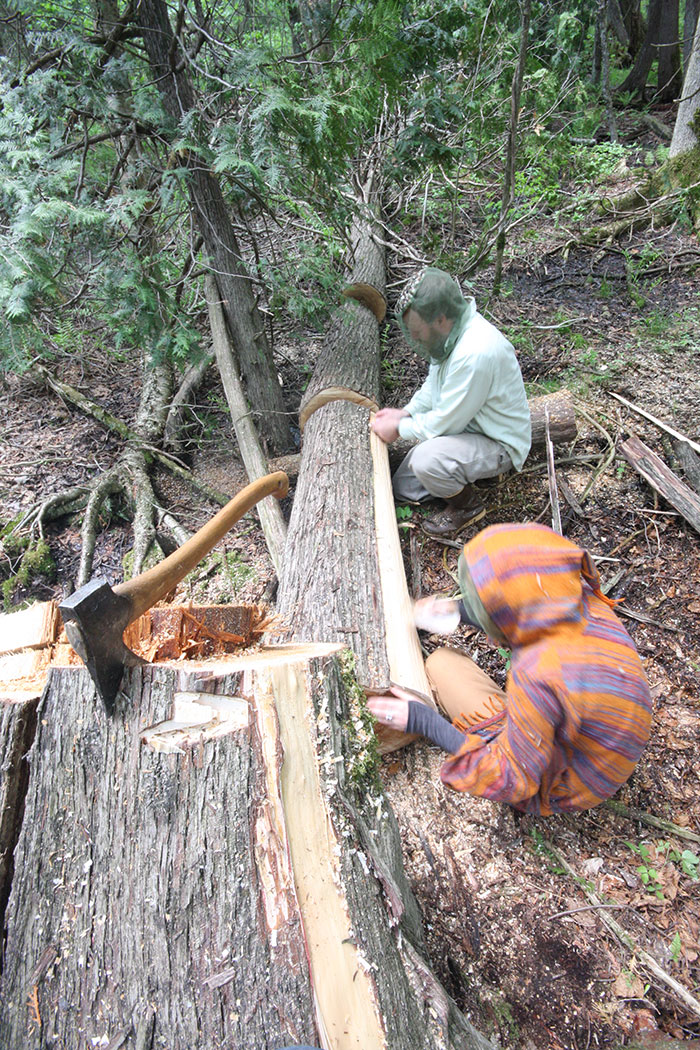
Jarrod and Jojo peeling and wearing bug nets, we needed them. We may get time to play with some of the bark later.
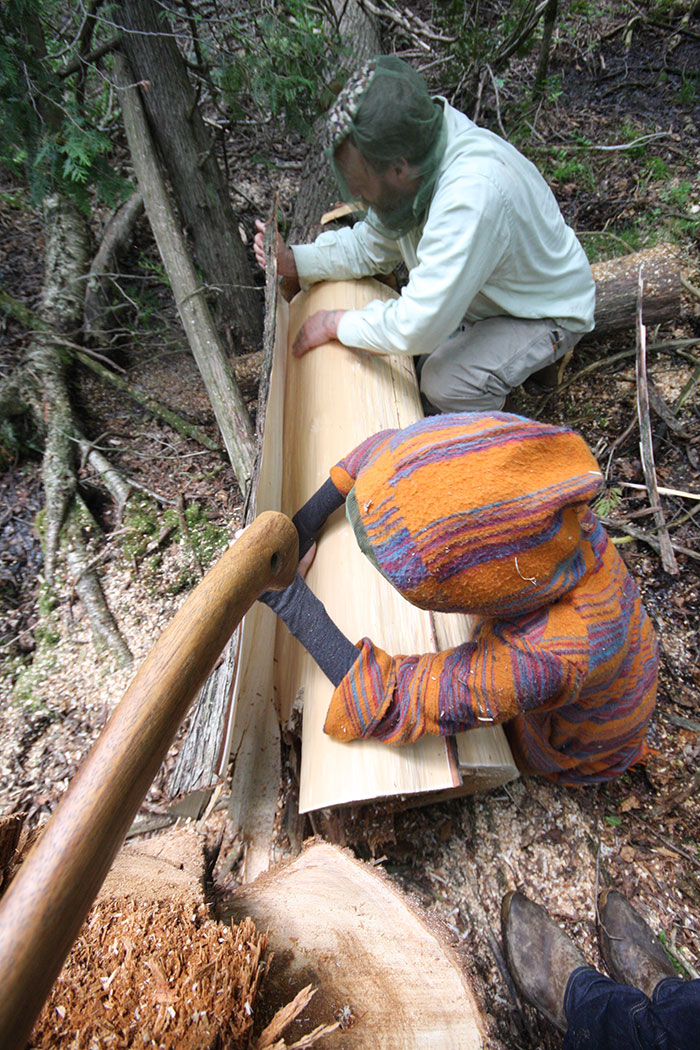 Then we started to split them up with hammer and wedges. You can see the heart rot here but there is a circle of good heartwood between that and the thin layer of sapwood that we can use. This tree is about 120 years old.
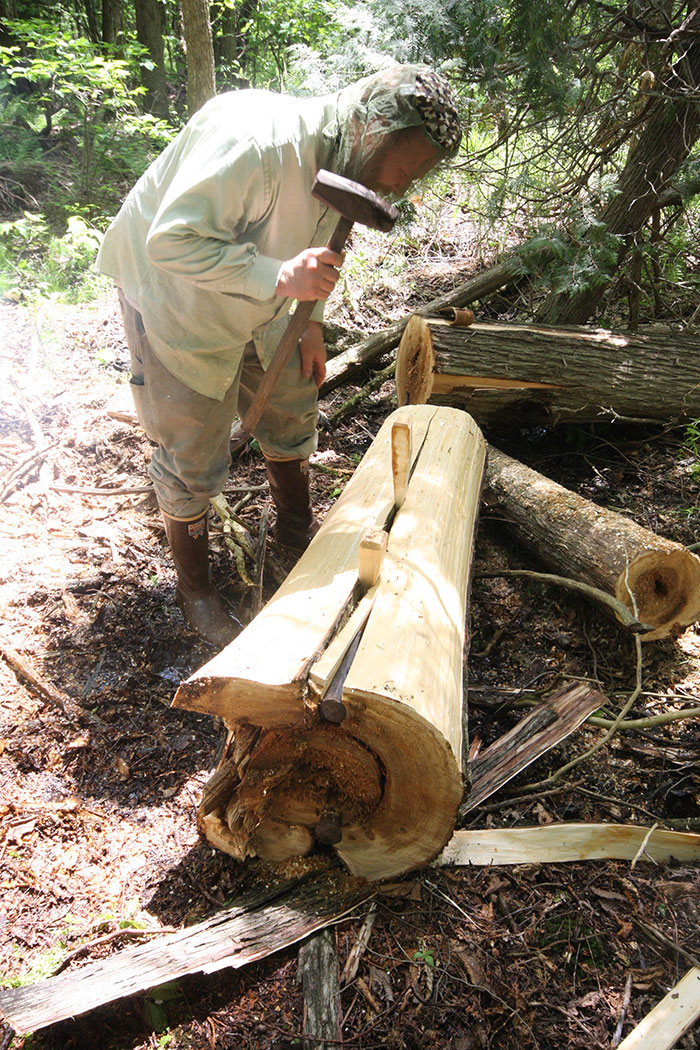 This is the way we roll, a mixture of primitive and modern technology.
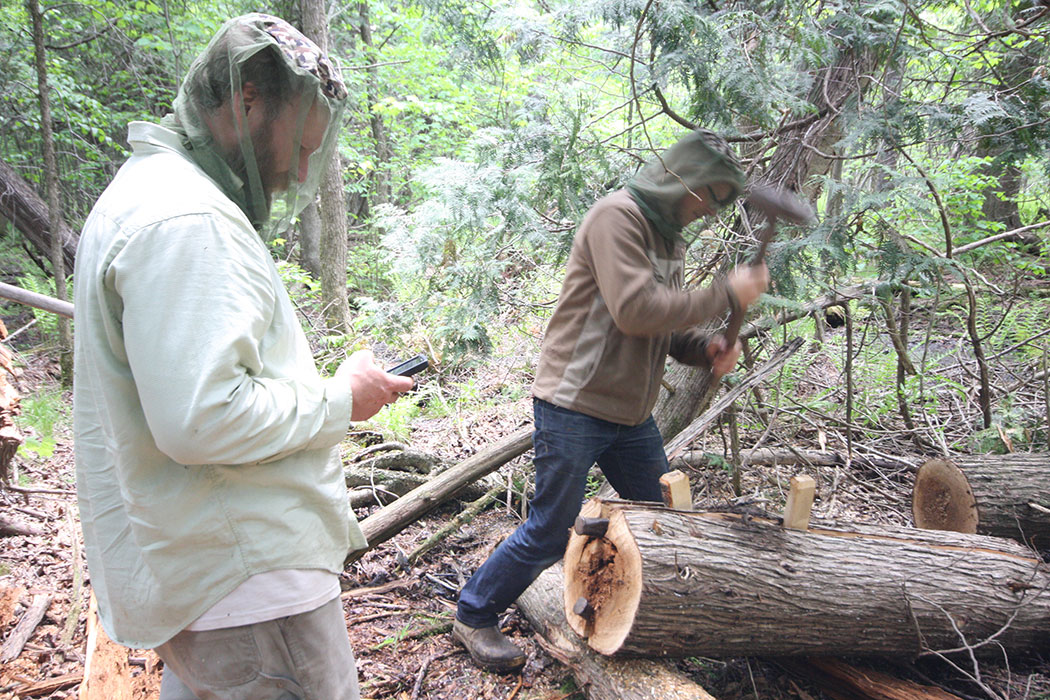 Jojo splitting a log.
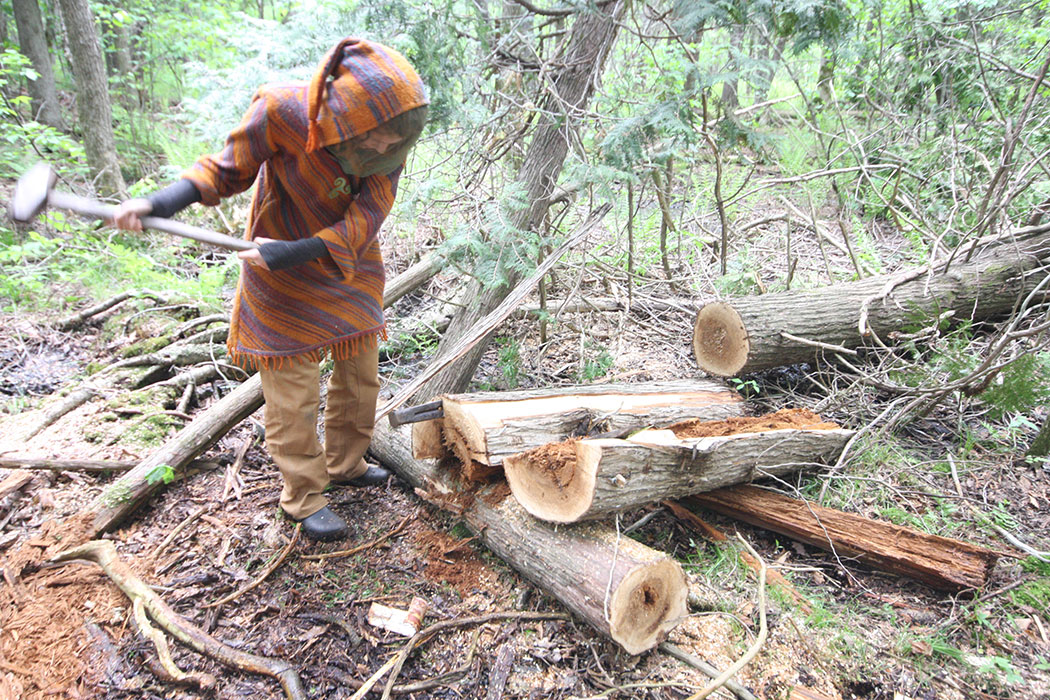 In the swamp we cleft the cedar down to manageable pieces ready to carry out to the road and got rid of the heart rot.
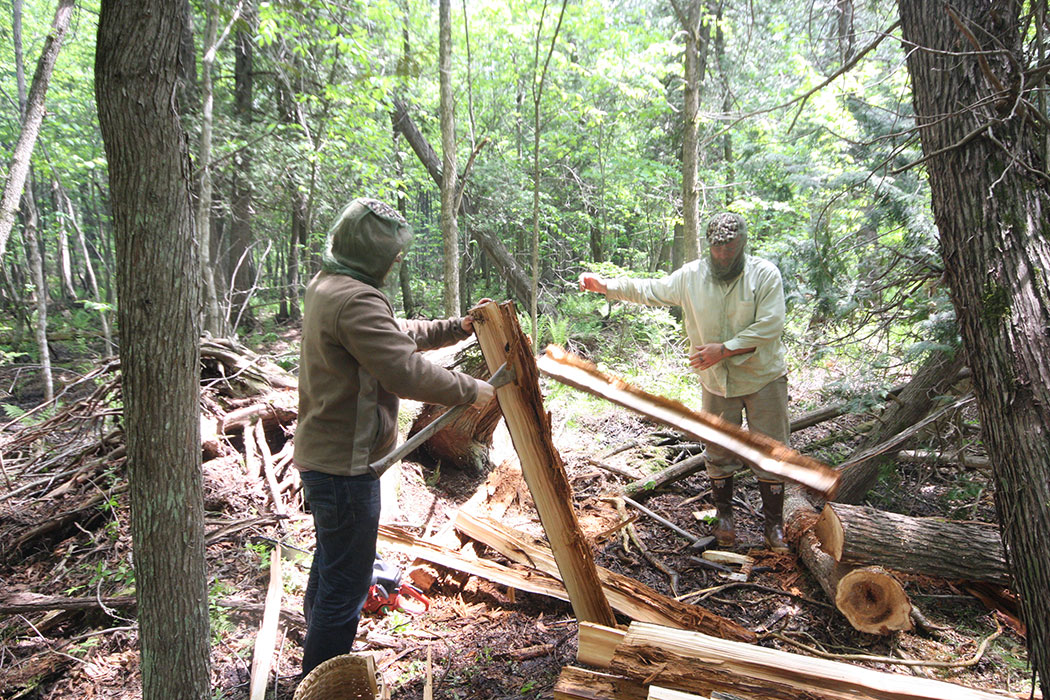
Me and Jarrod in lumberjack pose with our haul before the sweaty job of carting it out begins.
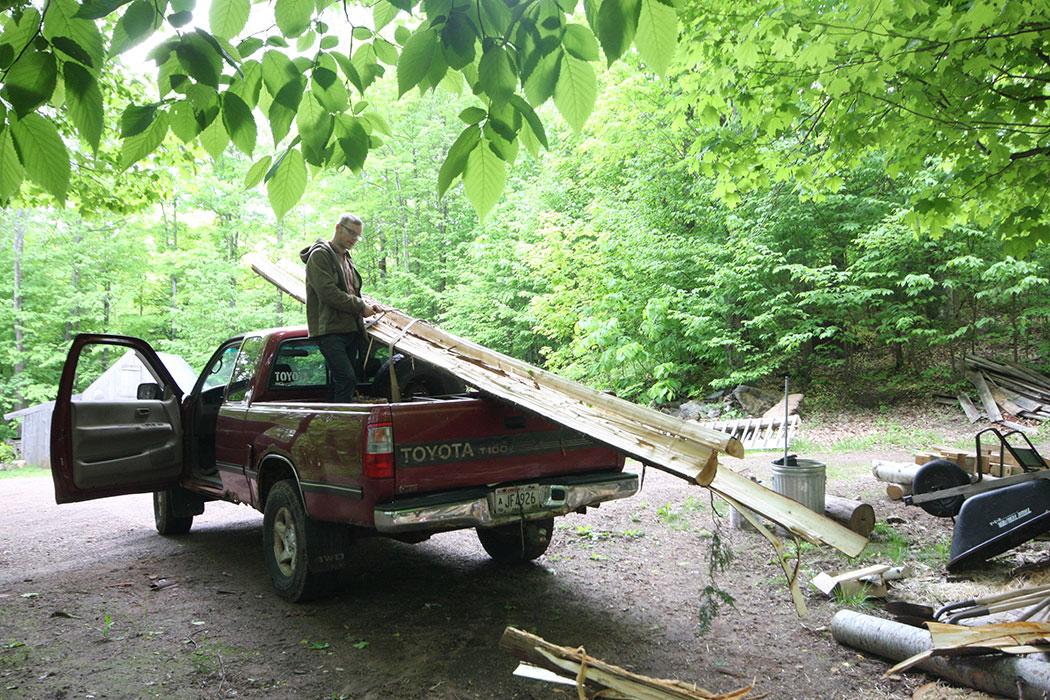
 The swamp is only half a mile down the road so we could fetch the long pieces back with me holding them on the roof.
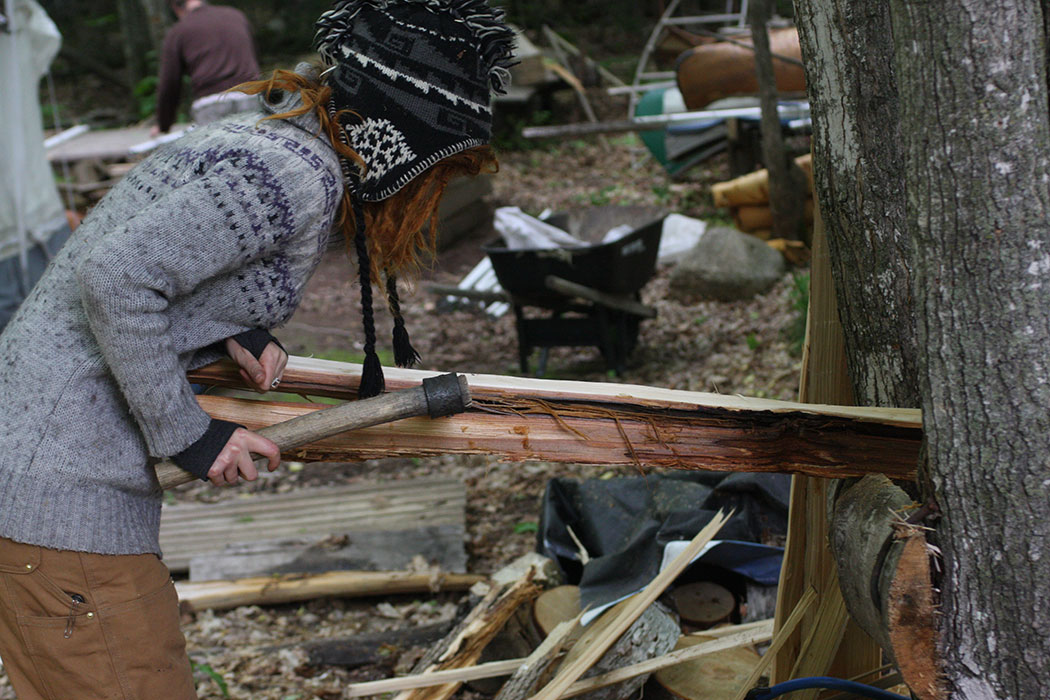
 Back home we used the cleaving break and froe to control the splits, Jojo has been working with Mike Abbott helping teach his chairmaking courses so is far more experienced with this than me.
 Jarod showed us how to cleave the cedar down very fine for sheathing, it is a simply amazing material. The split is started with a knife.
 Then you get in with your fingers.
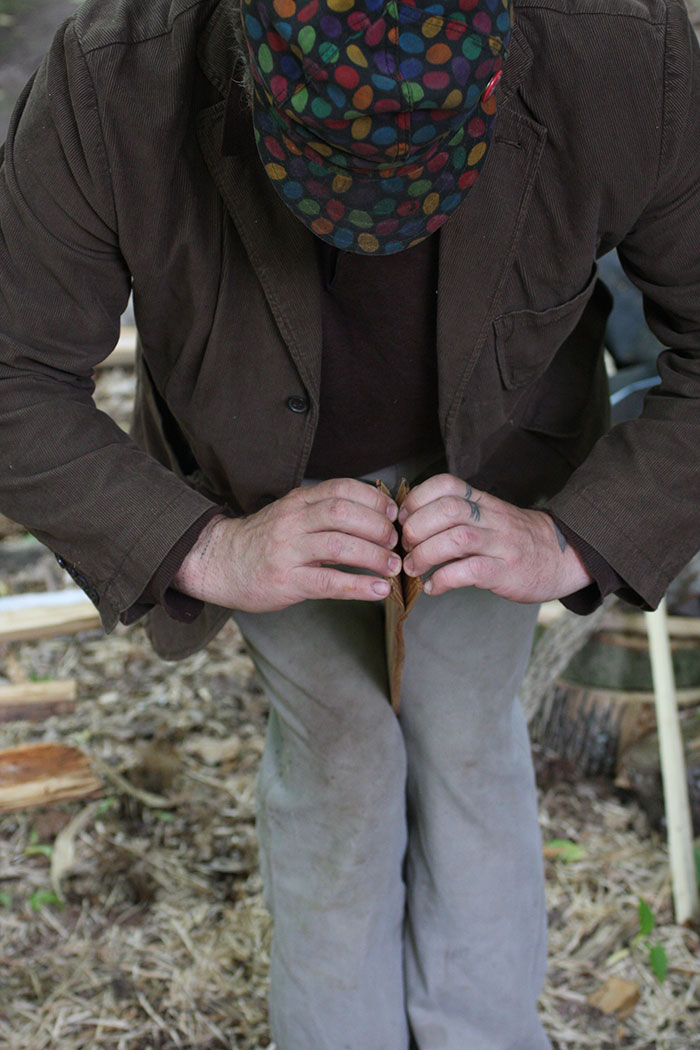 and pull gently making sure that each side is bending evenly.
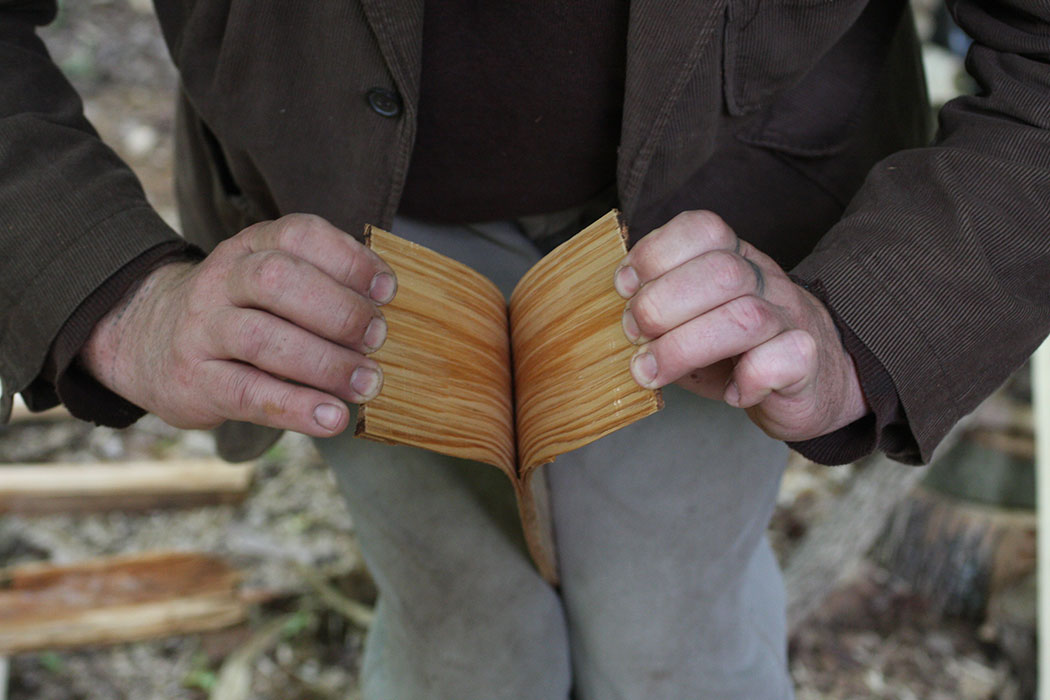 The split can be guided by putting extra pressure on the thicker side.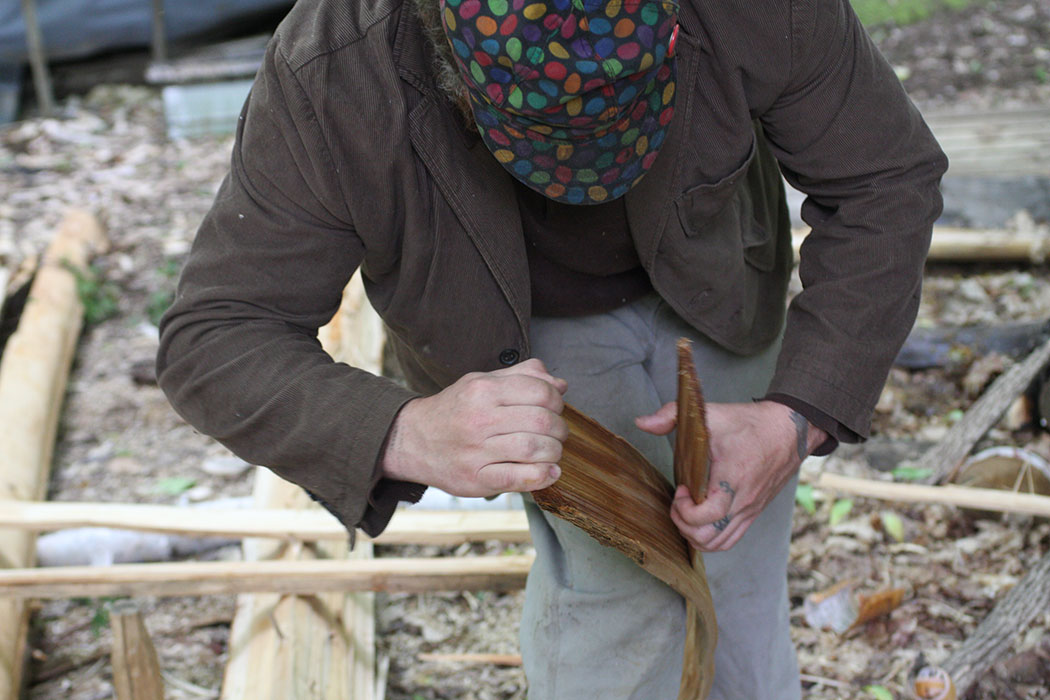
 These thin pieces will be used for the sheathing that goes between the bark and the ribs.
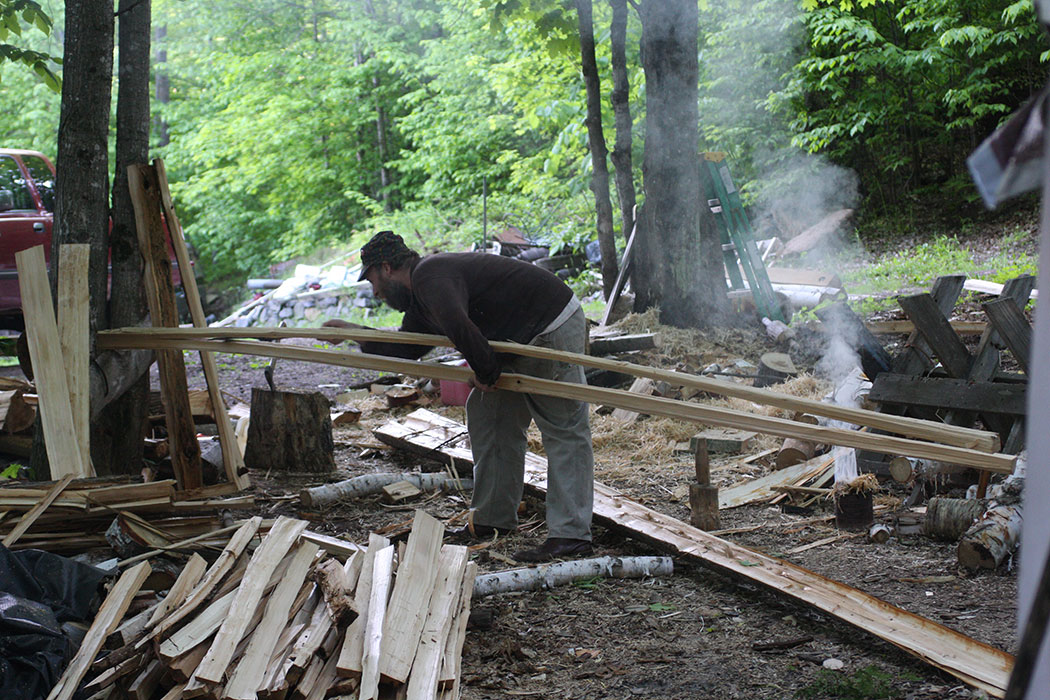
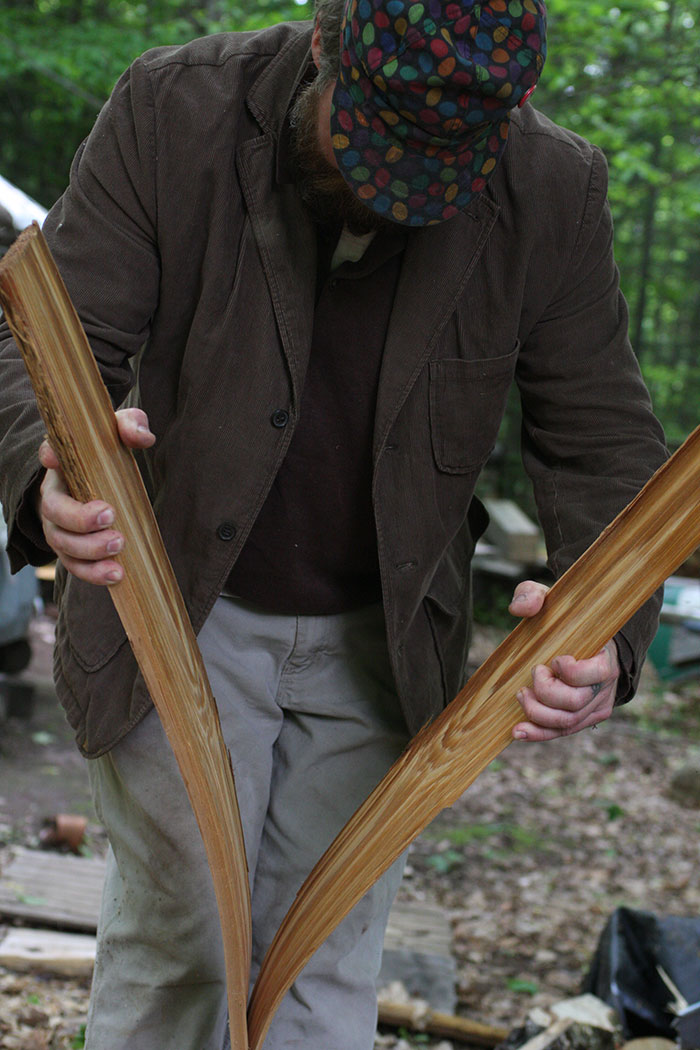 Next Jarrod worked on the long pieces for the gunwales in the UK this bark would be prime chair seating material.
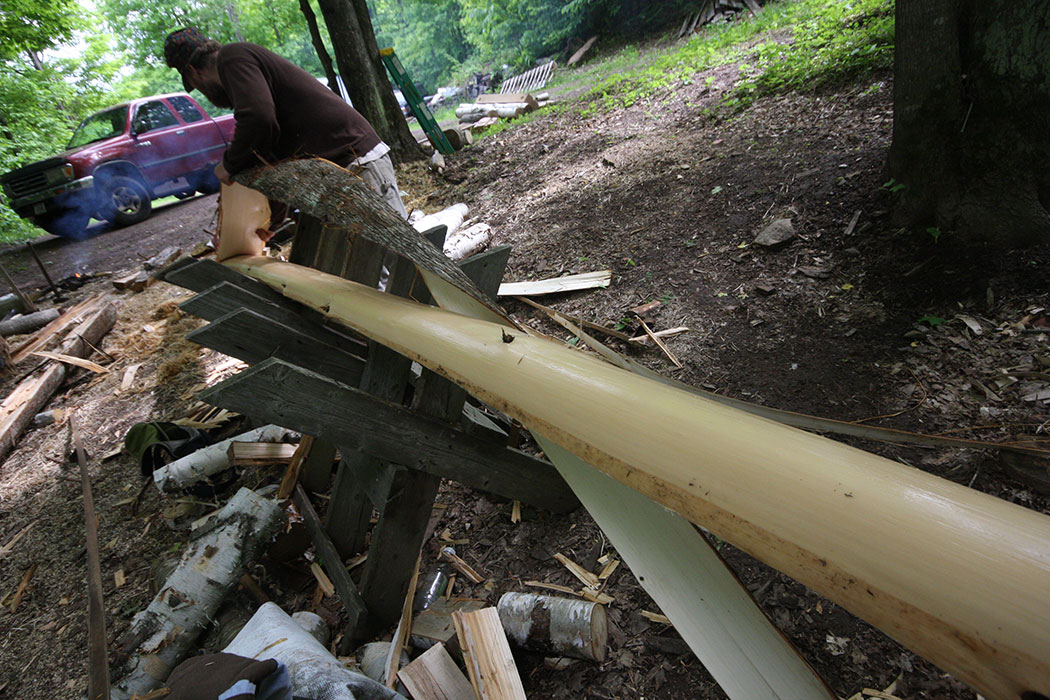 Using a tree to help guide the split.
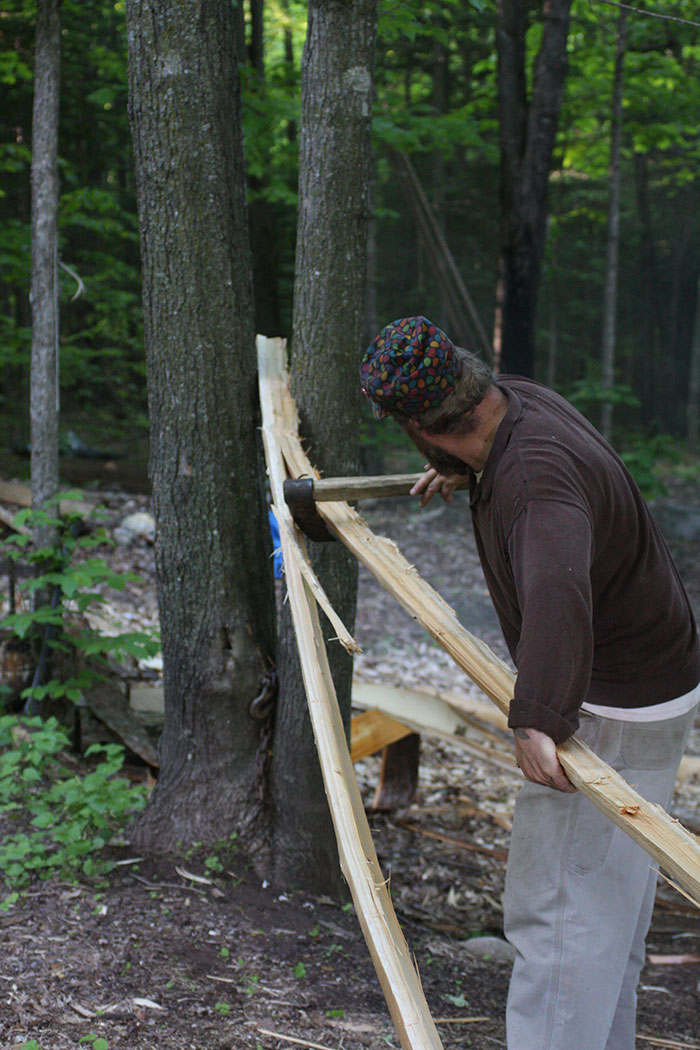 and the cleaving break for the fine work
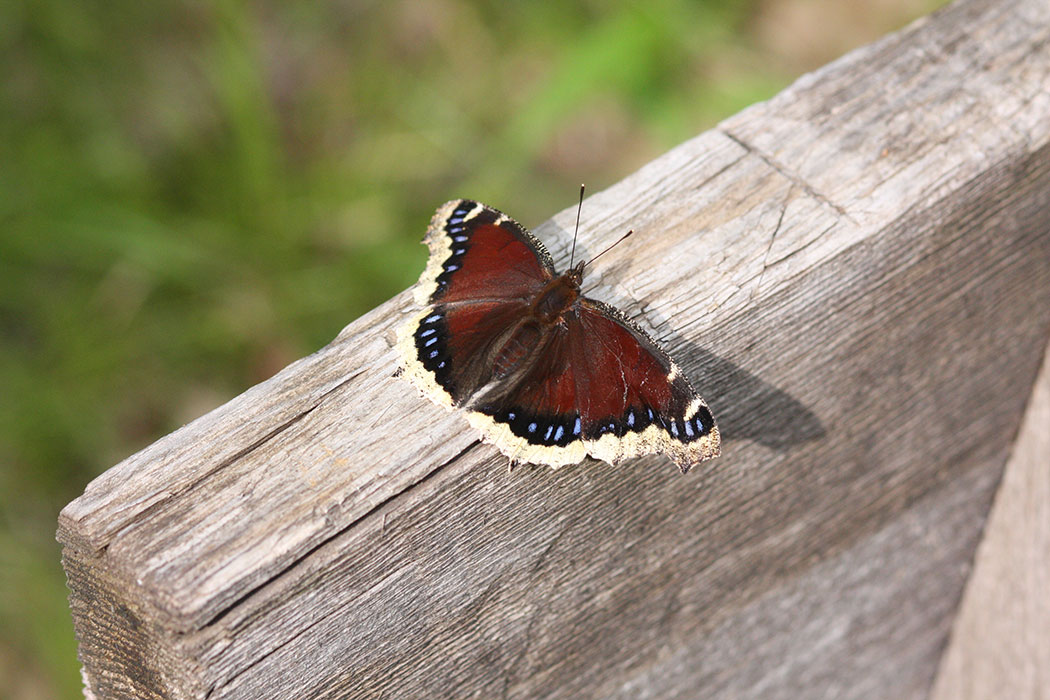
 I am continually entranced by the wildlife, the common animals like chipmonks that we don’t have at home are great to get to know. I don’t know what this butterfly looks like the Camberwell beauty which I have never seen in the UK, it is a very strong flier.
 We have all the materials for the build now so the next blog post will be laying out the bark and beginning the build.


Great series of posts on an amazing process. It is good to see someone who still knows and practices old skills such as canoe-making. My wife teaches on an Chippewa Indian reservation in Michigan and I am not sure that there is a single member of the tribe here that knows all of the skills required to build a canoe.
The name of the butterfly in your last photo is the Mourning Cloak (Nymphalis antiopa). This butterfly actually overwinters as an adult and can sometimes be seen flying around on warm winter days.
Thanks for confirmation Nymphalis antiopa is what we know as Camberwell beauty in the UK where it is rare migrant.